


What Is a Reduce Sugar Diet?
A reduce sugar diet focuses on minimizing sugar intake to improve overall health. As excessive sugar consumption is linked to a variety of health issues, including obesity, type 2 diabetes, and heart disease, following a reduce sugar diet can be a crucial step toward a healthier lifestyle. This approach encourages the consumption of natural, nutrient-dense foods while limiting processed items that often contain hidden sugars.

Why Reduce Sugar Intake?
Health Benefits
- Weight Management: Reducing sugar helps lower calorie intake, potentially assisting in weight loss.
- Improved Heart Health: A diet low in sugar can reduce the risk of heart disease by lowering blood pressure and triglycerides.
- Enhanced Energy Levels: Avoiding high-sugar foods stabilizes energy levels, avoiding crashes often caused by sugar spikes and drops.
- Better Skin Health: Lower sugar consumption may lead to reduced acne and skin aging, as sugar can trigger inflammation.
- Balanced Blood Sugar: A lower sugar diet aids in regulating insulin and blood glucose levels, essential for preventing insulin resistance.
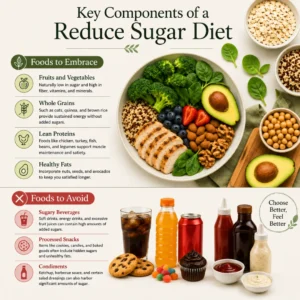
Key Components of a Reduce Sugar Diet
Foods to Embrace
- Fruits and Vegetables: Naturally low in sugar and high in fiber, vitamins, and minerals.
- Whole Grains: Such as oats, quinoa, and brown rice provide sustained energy without added sugars.
- Lean Proteins: Foods like chicken, turkey, fish, beans, and legumes support muscle maintenance and satiety.
- Healthy Fats: Incorporate nuts, seeds, and avocados to keep you satisfied longer.
Foods to Avoid
- Sugary Beverages: Soft drinks, energy drinks, and excessive fruit juices can contain high amounts of added sugars.
- Processed Snacks: Items like cookies, candies, and baked goods often include hidden sugars and unhealthy fats.
- Condiments: Ketchup, barbecue sauce, and certain salad dressings can also harbor significant amounts of sugar.

Implementing a Reduce Sugar Diet
Step-by-Step Guide
- Educate Yourself: Understand food labels and identify hidden sugars. Look for terms like sucrose, fructose, glucose, and corn syrup.
- Plan Your Meals: Create a weekly meal plan focusing on whole foods. This can help you avoid impulse purchases of sugary snacks.
- Cook at Home: Preparing your meals allows you to control ingredients and avoid added sugars often found in restaurant dishes.
- Stay Hydrated: Drink plenty of water and herbal teas to reduce cravings for sugary drinks.
- Check for Alternative Sweeteners: Consider using natural sweeteners like stevia or monk fruit in moderation.
Tips for Success
- Gradual Changes: Reduce sugar intake slowly rather than eliminating it all at once to make the transition easier.
- Find Support: Join a community or find a buddy who shares your goals to help stay accountable.
- Keep Healthy Snacks Handy: Stock up on fruits, nuts, and yogurt to ward off cravings throughout the day.
FAQs About a Reduce Sugar Diet
What are some signs I need to reduce my sugar intake?
Common signs include fatigue, frequent cravings for sugary foods, mood swings, and unexplained weight gain.
How much sugar is considered too much?
The American Heart Association recommends that women limit added sugars to no more than 6 teaspoons per day and men to no more than 9 teaspoons.
Can I still enjoy desserts?
Yes, but aim for healthier versions of desserts, such as fruit-based treats, or consider using natural sweeteners in moderation.
How can I replace my favorite sugary snacks?
Look for healthier alternatives, such as fruit for candy cravings or yogurt with berries instead of ice cream.
Adopting a reduce sugar diet can significantly improve your overall health and well-being. Supporting your journey with a balanced diet helps maintain energy levels, promotes better heart health, and contributes to weight loss. For guidance on how to incorporate more nutritious food into your life, visit our page on Clean Eating Diet or explore our insights on a Balanced Diet Definition.
Conclusion
Reducing sugar intake is one of the simplest yet most effective steps you can take toward a healthier lifestyle. By making mindful food choices and focusing on whole, nutrient-rich foods, you can improve your energy levels, support heart health, maintain balanced blood sugar, and achieve better overall well-being. Small, consistent changes often lead to long-term results, so there’s no need to eliminate sugar completely overnight. Start gradually, stay consistent, and build healthy habits that work for your daily routine. A balanced reduce sugar diet can help you feel healthier, more active, and more in control of your health journey.






Be First to Comment