


Understanding the Men Weight Loss Plan
Creating an effective men’s weight loss plan involves understanding the fundamental principles of nutrition, exercise, and behavioral changes. It’s not just about shedding pounds, but more importantly, about developing sustainable habits that lead to long-term health benefits.
Defining Your Weight Loss Goals
Before starting any weight loss plan, it’s crucial to establish clear, achievable goals. Consider the following steps:
- Set Specific Targets: Define how much weight you wish to lose and by when.
- Track Your Progress: Use apps or journals to monitor dietary intake and physical activity.
- Focus on Health, Not Just Weight: Prioritize overall wellness rather than a specific number on the scale.

Key Components of a Successful Men’s Weight Loss Plan
An effective men weight loss plan comprises a balanced approach to diet, exercise, and lifestyle changes.
Nutrition: The Foundation of Weight Loss
Diet plays a pivotal role in weight loss. Here’s how to structure your meals:
- Balanced Macronutrients: Aim for a mix of carbohydrates, proteins, and healthy fats. Proteins are essential as they help in muscle repair and growth.
- Incorporate Whole Foods: Focus on fruits, vegetables, whole grains, lean proteins, and healthy fats.
- Manage Portions: Be mindful of portion sizes to avoid overeating. Consider using smaller plates or measuring out servings.
- Hydration: Drink plenty of water throughout the day to help regulate appetite and support metabolic processes.
Exercise: Building an Active Lifestyle
Incorporating regular physical activity is essential in any men weight loss plan. Here are important elements to consider:
- Strength Training: Aim for at least two days a week of resistance training. This builds muscle mass, which can increase your resting metabolic rate.
- Cardio Workouts: Engage in moderate to high-intensity cardiovascular exercises like running, cycling, or swimming. Aim for at least 150 minutes of aerobic activity weekly.
- High-Intensity Interval Training (HIIT): Consider incorporating HIIT to maximize calorie burn in a shorter time. This flexible workout strategy can enhance your weight loss journey.
Learn more about a structured approach in our detailed workout plan to get the most out of your exercise regime.

Behavioral Strategies for Weight Loss
Changing habits can be challenging. Here are actionable strategies to help support your weight loss efforts:
- Mindful Eating: Slow down while eating, and pay attention to hunger cues. This helps prevent overeating and increases satisfaction.
- Limit Distractions: Avoid eating in front of screens. Focus on your meal to enhance enjoyment and regulate portion sizes.
- Find Support: Join groups or find a workout buddy to keep motivated and accountable.
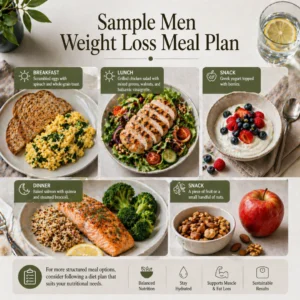
Sample Men Weight Loss Meal Plan
A well-structured meal plan can simplify daily choices. Here’s a sample one-day menu:
- Breakfast: Scrambled eggs with spinach and whole-grain toast.
- Lunch: Grilled chicken salad with mixed greens, walnuts, and balsamic vinaigrette.
- Snack: Greek yogurt topped with berries.
- Dinner: Baked salmon with quinoa and steamed broccoli.
- Snack: A piece of fruit or a small handful of nuts.
For more structured meal options, consider following a diet plan that suits your nutritional needs.
Frequently Asked Questions
What is the best exercise for weight loss in men?
While a combination of cardio and strength training yields the best results, what matters most is finding an exercise you enjoy. This will enhance adherence to your workout plan and promote sustained weight loss.
How can I stay motivated?
Regularly update your goals and celebrate small victories. Engage in various activities to keep your routine interesting and reduce burnout.
Should I follow a specific diet for weight loss?
Each individual’s needs differ, but focusing on whole foods and maintaining a caloric deficit is key. Personalize your approach and seek advice from a qualified nutritionist for tailored guidance.
Can I combine this with a weight loss for women plan?
Absolutely. Although there may be some physiological differences, many principles apply across both genders. It’s important to tailor plans according to each individual’s particular needs and responses.
The Importance of Professional Support
Consulting with fitness professionals or nutritionists can be beneficial, providing tailored support and accountability. For further training advice, check out our detailed guide on the men gym workout plan.






Be First to Comment