


If you often find yourself reaching for a cookie after dinner, adding sugar to your coffee, or looking for something sweet in the afternoon, you’re not alone. Sugar cravings are common and can be influenced by your eating habits, stress, sleep, routines, and the types of foods you regularly eat.
The good news is that you don’t have to completely eliminate sugar from your diet to manage sugar cravings. Instead, small and consistent changes can make sweet foods less tempting and help you develop eating habits that keep you satisfied.
This guide explains why sugar cravings happen and offers practical strategies you can use in everyday life.
Why Do Sugar Cravings Happen?
A craving for something sweet doesn’t necessarily mean your body needs sugar. In many cases, cravings are connected to habits, hunger, emotions, or your environment.
For example, if you normally have dessert after dinner, your brain may begin to associate finishing a meal with eating something sweet. Over time, that routine can make you want dessert even when you’re not physically hungry.
Other common triggers include:
• Going too long without eating
• Eating meals that are low in protein or fiber
• Stress or emotional eating
• Boredom
• Poor sleep
• Seeing or smelling highly tempting foods
• Drinking sugary beverages regularly
• Using sweets as a reward
Understanding your personal triggers is an important first step toward managing sugar cravings.
Added Sugar vs Natural Sugar
It’s also important to understand that not all sugar comes from the same source.
Whole fruits, vegetables, and plain dairy foods naturally contain sugar along with other nutrients. For example, whole fruit provides fiber, vitamins, minerals, and water in addition to naturally occurring sugar.
Added sugar is different. It is added to foods or beverages during processing or preparation. Common sources include soda, candy, desserts, sweetened coffee drinks, breakfast cereals, flavored yogurt, and many packaged snacks.
When you’re trying to manage sugar cravings, focusing on reducing added sugar is generally more useful than trying to avoid naturally occurring sugar in nutritious foods such as fruit.
How Sugar Can Affect Your Eating Habits
Foods high in added sugar can be very easy to eat quickly and in large portions. Many sugary foods provide plenty of calories without offering much protein or fiber, two nutrients that can contribute to feelings of fullness.
This doesn’t mean that eating dessert occasionally is unhealthy. Instead, the bigger picture matters.
If most of your meals contain satisfying foods and you enjoy sweets in reasonable portions, it can be easier to maintain a balanced eating pattern without constantly feeling deprived.
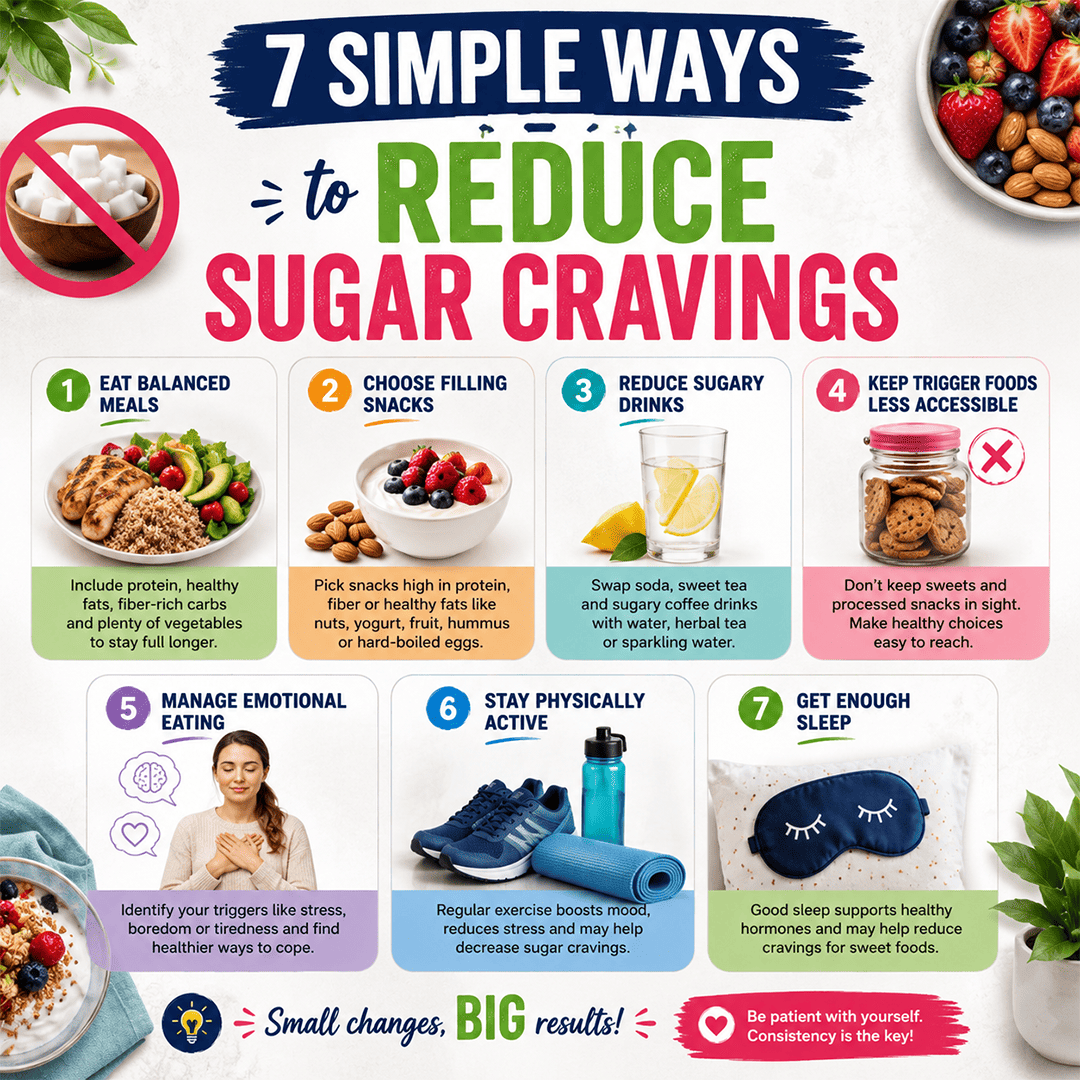
7 Simple Ways to Reduce Sugar Cravings
1. Eat Balanced Meals
One of the most practical ways to manage sugar cravings is to avoid getting excessively hungry.
Try to include a combination of protein, fiber-rich carbohydrates, vegetables or fruit, and healthy fats in your meals.
Good choices include:
• Eggs
• Chicken or turkey
• Fish
• Beans and lentils
• Greek yogurt
• Oatmeal
• Brown rice
• Quinoa
• Whole-grain bread
• Vegetables
• Fruit
• Nuts and seeds
• Avocado
For example, instead of starting your day with a highly sweetened breakfast cereal, you could have oatmeal with berries, walnuts, and plain Greek yogurt.
A satisfying meal can help you stay full and make sugar cravings easier to handle later in the day.
2. Choose Filling Snacks
When you genuinely need a snack, choose something that provides protein, fiber, or healthy fats rather than relying only on sugary foods.
Some simple options include:
• Apple with peanut butter
• Plain Greek yogurt with berries
• A small handful of nuts and a piece of fruit
• Hummus with carrots or bell peppers
• Cottage cheese with fruit
• Hard-boiled egg with whole-grain crackers
• Popcorn with a small piece of dark chocolate
You can still enjoy something sweet. The idea is to choose foods that provide more nutritional value and help you feel satisfied.
3. Reduce Sugary Drinks
For many people, beverages are an easy source of added sugar. Soda, sweet tea, energy drinks, flavored coffee beverages, and other sweetened drinks can add a considerable amount of sugar to your daily diet.
If you’re dealing with frequent sugar cravings, start by changing one drink at a time.
Try:
• Drinking water instead of soda with one meal
• Choosing unsweetened iced tea
• Ordering coffee with less flavored syrup
• Adding lemon or lime to sparkling water
• Gradually reducing the amount of sugar in your coffee
You don’t have to make every change overnight. Gradually reducing sweetness can make the transition easier.
4. Keep Trigger Foods Less Accessible
Your surroundings can influence your food choices more than you might realize.
If candy, cookies, or other sweets are always sitting on your kitchen counter, they’re likely to catch your attention throughout the day.
Instead, make nutritious choices easy to see and reach.
Keep fruit on the counter, store nuts in convenient portions, and have quick protein-rich snacks available in the refrigerator.
You don’t need to ban sweets from your home. Simply making them less convenient can help reduce unnecessary sugar cravings.
5. Pay Attention to Emotional Eating
Sometimes you want something sweet even though you’re not hungry.
Stress, boredom, frustration, loneliness, or tiredness can all influence eating behavior. If you regularly use sweets as a way to cope with difficult emotions, recognizing the pattern can be helpful.
The next time a craving appears, pause for a moment and ask yourself:
• Am I actually hungry?
• When did I last eat?
• Am I stressed or bored?
• Am I tired?
• Do I really want this food, or am I looking for comfort?
If you’re not physically hungry, try taking a short walk, listening to music, talking with someone, drinking water, or simply stepping away from the situation for a few minutes.
These alternatives won’t eliminate every craving, but they can help you make a more conscious decision.
6. Stay Physically Active
Regular physical activity is an important part of overall health and can also support a healthier relationship with food.
You don’t need an intense workout routine to get started. Walking, cycling, swimming, dancing, strength training, or recreational sports can all count as physical activity.
If you spend most of your day sitting, try adding short walks throughout the day.
Exercise isn’t a guaranteed solution for sugar cravings, but staying active can support your mood, energy, sleep, and overall health.
7. Get Enough Sleep
Sleep and eating habits are closely connected.
When you’re tired, you may be more likely to reach for convenient, highly palatable foods. Poor sleep can also affect appetite and food preferences, which may make sugar cravings harder to manage for some people.
Instead of focusing only on food, pay attention to your sleep routine too.
Try to:
• Maintain a consistent bedtime
• Keep your bedroom comfortable and dark
• Limit stimulating activities before bed
• Avoid regularly staying up very late
• Give yourself enough time to sleep
Better sleep won’t necessarily make every craving disappear, but it can support healthier habits overall.
What to Do When a Sugar Craving Hits
You don’t have to automatically fight a craving or immediately give in to it.
Try the following approach:
Pause: Give yourself a few minutes before making a decision.
Check your hunger: If you haven’t eaten for several hours, you may simply need a meal or snack.
Drink something: Have a glass of water and see whether you still want something sweet.
Choose intentionally: If you still want dessert, have a reasonable portion and enjoy it without guilt.
Look for patterns: If the same craving happens at the same time every day, consider what might be triggering it.
This approach can be more sustainable than trying to rely entirely on willpower.

What About Supplements for Sugar Cravings?
You may come across supplements marketed as solutions for sugar cravings, including chromium, cinnamon, L-glutamine, and other ingredients.
It’s important to be cautious with these products. Supplements should not be treated as guaranteed solutions for cravings, and evidence for their effectiveness can vary. Some supplements may also interact with medications or may not be appropriate for people with certain health conditions.
Before taking a supplement specifically to manage sugar cravings, talk with a healthcare professional, particularly if you have diabetes, take prescription medications, or have another medical condition.
For most people, it makes sense to focus first on the basics: balanced meals, nutritious snacks, regular activity, adequate sleep, and reducing sugary drinks.
How Much Added Sugar Is Too Much?
You don’t have to completely remove sugar from your diet.
The American Heart Association recommends limiting added sugar to no more than about 6% of daily calories. Its recommendation is no more than 25 grams, or about 6 teaspoons, of added sugar per day for most women and 36 grams, or about 9 teaspoons, for most men.
Remember that these recommendations refer to added sugar, not the naturally occurring sugar found in foods such as whole fruit and plain milk.
One easy way to keep track is to check the Added Sugars line on the Nutrition Facts label when purchasing packaged foods and beverages.
How to Make Your Diet Less Dependent on Sweet Foods
Trying to eliminate every sweet food can make healthy eating feel unnecessarily restrictive.
Instead, focus on changing your overall eating pattern.
If you normally add two teaspoons of sugar to your coffee, try one and a half for a while. If you drink soda every day, replace one serving with water or sparkling water. If you eat dessert every night, try having a smaller portion or choosing it on fewer days.
These small changes may seem insignificant at first, but they can add up over time.
You can also experiment with naturally flavorful foods. Fresh berries, cinnamon, vanilla, citrus, and unsweetened cocoa can add flavor without requiring large amounts of added sugar.
Frequently Asked Questions
How can I reduce sugar cravings naturally?
Start by eating balanced meals containing protein and fiber, choosing satisfying snacks, drinking fewer sugary beverages, getting enough sleep, staying active, and identifying emotional or environmental triggers.
What should I eat when I have sugar cravings?
Try pairing fruit with protein or healthy fat. An apple with peanut butter, berries with plain Greek yogurt, or fruit with a small handful of nuts can be satisfying options.
Does drinking water stop sugar cravings?
Drinking water is important for staying hydrated, and sometimes thirst can be confused with hunger. Water may help you determine whether you’re actually hungry, although it won’t necessarily eliminate a genuine craving for something sweet.
Can stress cause sugar cravings?
Stress can influence eating behavior and may make highly palatable foods more appealing. If you notice that sugar cravings happen mainly during stressful situations, finding other ways to manage stress may help.
Is fruit okay if I’m trying to eat less sugar?
Yes. Whole fruit can be part of a healthy eating pattern. Although fruit contains naturally occurring sugar, it also provides fiber and important nutrients. When reducing sugar, focus primarily on cutting back on added sugar from foods and beverages.
How long does it take to reduce sugar cravings?
There is no specific timeline that applies to everyone. Your cravings may change as you adjust your eating habits, reduce exposure to very sweet foods, improve sleep, and manage stress. Gradual changes are usually easier to maintain than trying to change everything at once.
Should I completely stop eating sugar?
For most people, completely eliminating all sugar isn’t necessary. A more realistic approach is to reduce added sugar while continuing to enjoy nutritious foods and occasional treats as part of a balanced diet.
Conclusion
Reducing sugar cravings doesn’t require an extreme diet or a complete ban on dessert. The most useful approach is to build habits that keep you satisfied and make highly sweetened foods less central to your everyday diet.
Start with a few realistic changes. Eat balanced meals, choose filling snacks, drink fewer sugary beverages, get enough sleep, stay physically active, and pay attention to emotional triggers.
You don’t need to be perfect. If you eat more sweets than you planned one day, simply return to your normal routine at your next meal.
The goal isn’t to never want something sweet again. It’s to feel more in control of your choices and develop eating habits that you can realistically maintain for the long term.






Be First to Comment