

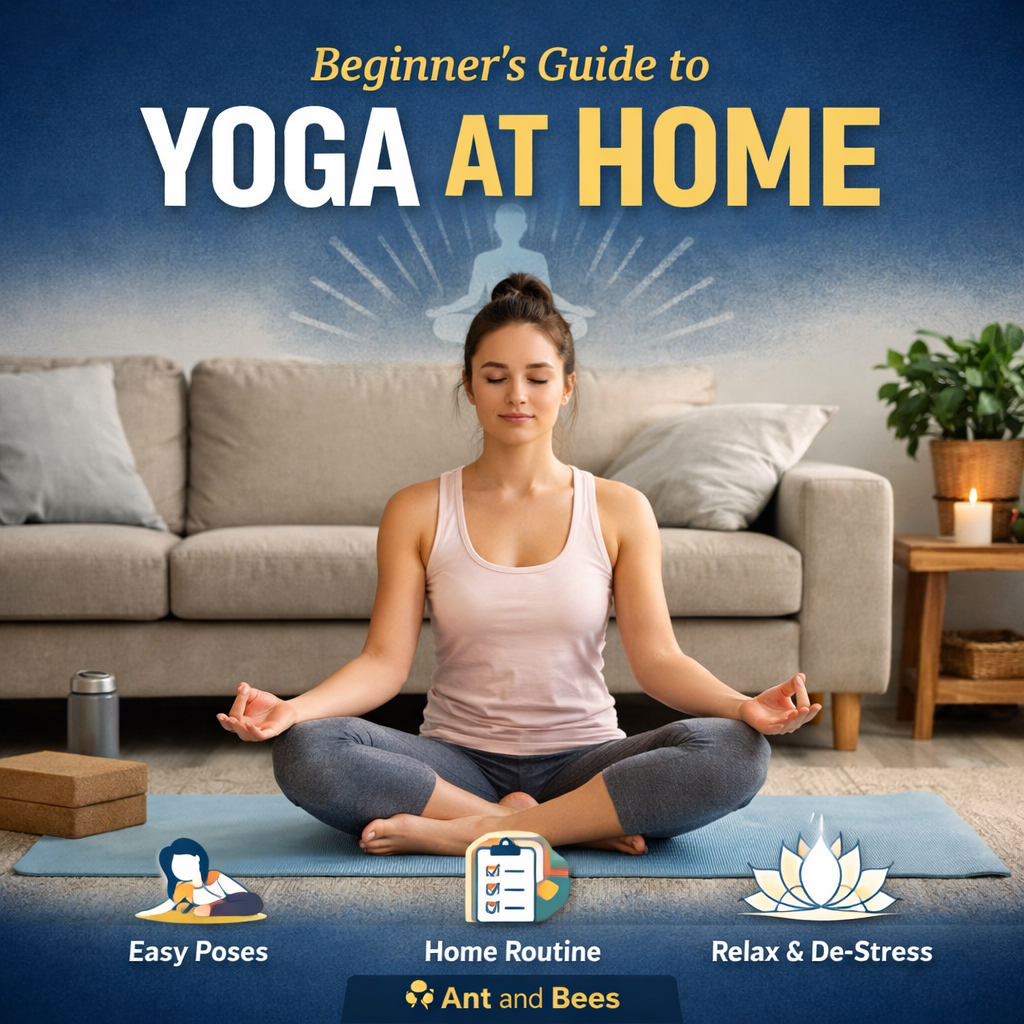
Starting yoga can feel overwhelming, especially if you’ve never practiced before. You might wonder whether you need expensive equipment, special training, or a studio membership to begin. The truth is much simpler. Yoga is one of the most accessible forms of exercise, and you can easily start a yoga practice right from the comfort of your home.
For many people in the United States, busy schedules, long commutes, and rising gym costs make home workouts more appealing than ever. Yoga at home provides a flexible and affordable way to improve both physical and mental health without leaving your living room.
In this beginner-friendly yoga at home guide from Ant and Bees, you’ll learn everything you need to know about getting started, including basic poses, essential tips, and how to build a sustainable routine that fits your lifestyle.
Why Yoga Is Perfect for Beginners
Yoga has been practiced for thousands of years, but its popularity has exploded in the U.S. over the past decade. According to recent wellness surveys, millions of Americans now practice yoga regularly because it offers a balanced combination of movement, mindfulness, and relaxation.
For beginners, yoga offers several benefits:
1. Improves Flexibility
Many people believe they need to be flexible before starting yoga, but the opposite is true. Yoga helps gradually improve flexibility over time. Even simple stretches can loosen tight muscles and joints.
2. Builds Strength
Yoga may look gentle, but it engages many muscle groups. Poses like plank or downward dog strengthen the arms, legs, and core without requiring weights.
3. Reduces Stress
One of the biggest reasons people start a yoga practice is to manage stress. Deep breathing combined with mindful movement can calm the nervous system and improve mental clarity.
4. Supports Overall Health
Regular yoga practice can improve posture, balance, circulation, and sleep quality. Many beginners notice positive changes within just a few weeks.
Benefits of Practicing Yoga at Home
Many beginners wonder whether they should join a studio or practice at home. While studios can offer guidance, practicing at home provides several advantages.
Convenience
With a yoga at home guide, you can practice anytime. Whether it’s early morning before work or evening after dinner, you have complete control over your schedule.
Cost Savings
Yoga studios in the U.S. can cost anywhere from $15 to $30 per class. Practicing at home eliminates those expenses.
Privacy and Comfort
Some beginners feel self-conscious in group classes. Practicing at home allows you to learn poses at your own pace without pressure.
Personalized Routine
You can choose sessions that match your energy level, goals, and available time.
At Ant and Bees, we encourage beginners to create a simple and consistent home yoga routine that feels enjoyable rather than stressful.
What You Need to Start Yoga at Home
One of the best things about yoga for beginners is that it requires very little equipment.
Here are the basics:
Yoga Mat
A non-slip yoga mat provides cushioning and stability during poses.
Comfortable Clothing
Wear breathable clothes that allow you to move freely. Athletic wear or simple workout clothes work perfectly.
Quiet Space
Choose a calm area where you can stretch comfortably without distractions.
Water Bottle
Staying hydrated is always important during physical activity.
Optional items include yoga blocks, straps, or cushions, but they are not necessary for beginners.
How to Start a Yoga Practice at Home
If you’re wondering how to start a yoga practice, the key is simplicity and consistency.
Follow these steps to begin your journey.
1: Set Realistic Goals
Many beginners make the mistake of trying advanced poses too quickly. Instead, focus on short sessions of 10 to 20 minutes and gradually increase the duration.
2: Choose a Beginner Routine
Look for routines specifically designed for yoga for beginners. These usually focus on basic stretches and breathing exercises.
3: Focus on Breathing
Breathing is a fundamental part of yoga. Slow, controlled breathing helps the body relax and improves oxygen flow.
4: Practice Regularly
Consistency matters more than intensity. Practicing three to five times per week can produce noticeable results.
5: Listen to Your Body
Yoga should never feel painful. If a pose feels uncomfortable, modify it or take a break.
Best Yoga Poses for Beginners
If you’re starting a yoga practice at home, these beginner-friendly poses are a great place to begin.
Mountain Pose (Tadasana)
This pose may look simple, but it teaches proper posture and balance.
How to do it:
- Stand tall with feet together.
- Relax your shoulders.
- Keep your spine straight.
- Breathe deeply for several seconds.
Downward Dog (Adho Mukha Svanasana)
This classic yoga pose stretches the entire body.
Benefits include:
- Stretching hamstrings and calves
- Strengthening arms and shoulders
- Improving circulation
Child’s Pose (Balasana)
This is one of the most relaxing poses and perfect for beginners.
Benefits include:
- Gentle back stretch
- Stress relief
- Improved breathing
Cat-Cow Stretch
This simple movement helps warm up the spine.
How to do it:
- Start on hands and knees.
- Inhale while arching your back.
- Exhale while rounding the spine.
Warrior I
Warrior poses build strength and confidence.
Benefits include:
- Stronger legs
- Improved balance
- Increased stamina
Practicing these poses regularly can help beginners develop flexibility and body awareness.
Creating a Simple Yoga Routine
A beginner yoga session doesn’t need to be complicated. Here is a simple 15-minute routine to get started.
- Deep breathing – 2 minutes
- Cat-Cow stretch – 2 minutes
- Downward dog – 2 minutes
- Warrior pose – 3 minutes
- Child’s pose – 3 minutes
- Relaxation (lying down) – 3 minutes
Over time, you can add more poses and extend your practice to 30 minutes or longer.
Common Mistakes Beginners Should Avoid
When people start yoga for beginners, they often make a few common mistakes.
- Comparing Yourself to Others
Yoga is a personal journey. Everyone’s body is different, so progress will vary. - Skipping Warm-Ups
Always begin with gentle stretches to avoid injury. - Holding Your Breath
Breathing naturally is essential during yoga practice. - Overtraining
Practicing every day without rest can lead to fatigue. Start with a few sessions per week.
How Yoga Improves Mental Wellness
Yoga is not just physical exercise; it also supports emotional well-being.
In today’s fast-paced American lifestyle, many people struggle with anxiety, burnout, and poor sleep. Yoga encourages mindfulness and helps individuals reconnect with their bodies and breathing.
Regular practice can help:
- Reduce stress levels
- Improve focus and concentration
- Promote better sleep
- Increase overall happiness
Many beginners report feeling calmer and more energized after just a few sessions.
Staying Motivated With Your Yoga Practice
Starting is easy, but staying consistent can be challenging. Here are a few tips to maintain motivation.
- Create a Dedicated Yoga Space
Having a small area for your mat helps establish a routine. - Practice at the Same Time
Morning or evening routines help build consistency. - Track Your Progress
Write down how you feel after each session. Seeing improvement can be very motivating. - Keep It Fun
Try different beginner sequences to keep your practice interesting.
At Ant and Bees, we believe that yoga should feel rewarding, not like another task on your to-do list.
When Will You See Results?
One of the most common questions beginners ask is how long it takes to see results.
Most people notice improvements in flexibility and relaxation within two to three weeks of regular practice. Strength and balance improvements may take a little longer, but the benefits continue to grow over time.
The key is consistency rather than perfection.
Final Thoughts
Starting yoga at home is one of the best decisions you can make for your physical and mental health. You don’t need expensive equipment, advanced skills, or a gym membership to begin. All you need is a quiet space, a few minutes each day, and the willingness to learn.
This yoga at home guide is designed to help beginners build a strong foundation and develop a sustainable routine. By practicing regularly and listening to your body, you can gradually improve flexibility, strength, and overall wellness.
At Ant and Bees, our goal is to help readers discover simple and effective ways to live healthier lives. Whether you’re looking to reduce stress, improve fitness, or simply try something new, yoga is a powerful place to start.
Take a deep breath, roll out your mat, and begin your yoga journey today.

Be First to Comment